ANN and HNSW
What is Approximate Nearest Neighbor (ANN)?
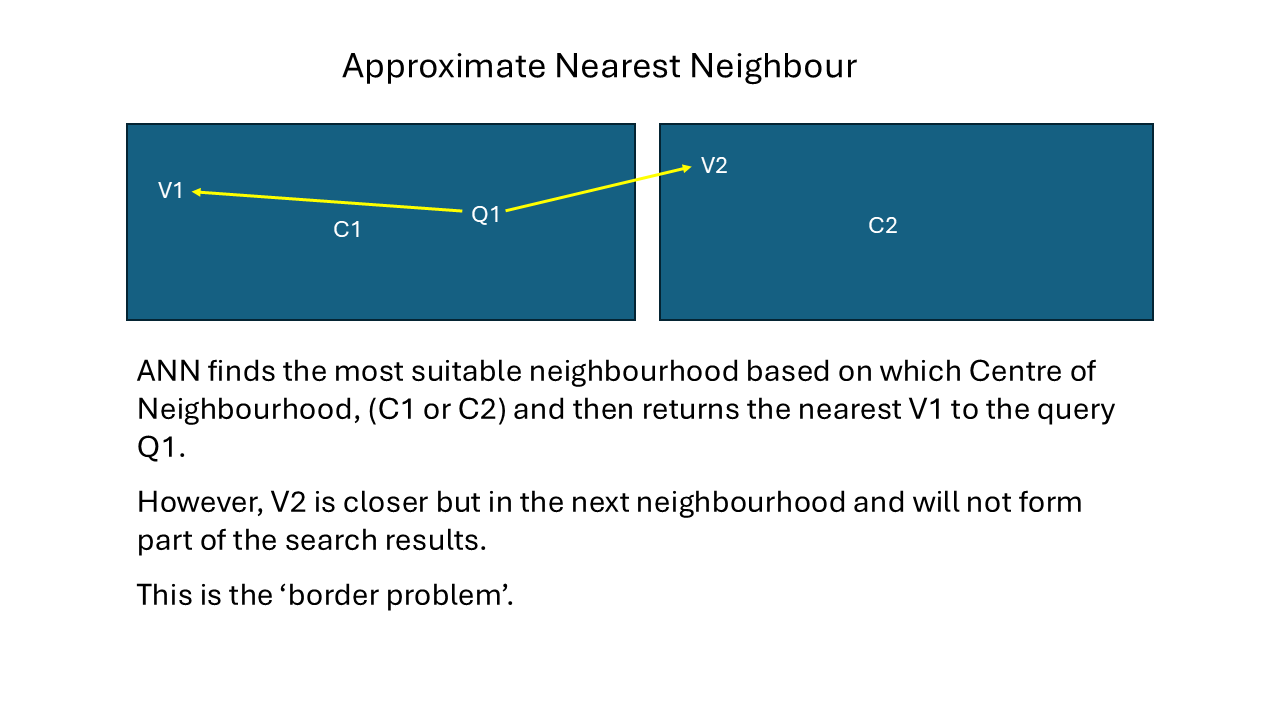
ANN is a fast method for finding vectors that are close enough to a query point — without scanning the entire database.
It’s widely used in search engines, recommendation systems, and vector databases.
Instead of checking every vector, ANN algorithms:
- Divide the space into partitions (like clusters or cells)
- Search only within the partition where the query lands
- Return the closest match within that partition
This makes ANN fast — but not always accurate.
When you run vector search, you’re essentially asking:
“Which stored vectors are closest to my query vector?”
If you have 1,000 vectors, brute‑force search is fine.
If you have 100,000+ vectors, brute‑force becomes painfully slow.
If you have millions, it’s impossible to do real‑time search without optimization.
That’s where ANN comes in.
What ANN Does
ANN algorithms don’t search every vector.
Instead, they use clever indexing structures to find vectors that are very close to the true nearest neighbours — but much faster.
You trade tiny accuracy loss for massive speed gains.
ANN in Practice
Most vector databases use ANN under the hood:
| Vector DB    | ANN Algorithm |
|--------------|---------------|
| **FAISS**    | HNSW, IVF, PQ |
| **Pinecone** | HNSW          |
| **Weaviate** | HNSW          |
| **Milvus**   | HNSW, IVF     |
| **Qdrant**   | HNSW          |
If you use any of these with WordPress, you’re already using ANN — even if you don’t know it.
The Border Problem
When a query lands near the edge of a partition, ANN might:
- Search only inside its assigned partition (e.g. Partition A)
- Return a vector that’s farther away
- Miss closer vectors in a neighboring partition (e.g. Partition B)
Why It Matters
This border issue can cause:
- Lower recall (missing relevant results)
- Poor recommendations or search matches
- Confusion in edge cases (e.g. similar products or documents)
How to Fix It
Advanced techniques like:
- Multi-probe search (check nearby partitions)
- Reranking (re-evaluate top candidates)
- HNSW graphs (link across partitions)
…can reduce border errors and improve accuracy.
Hierarchical Navigable Small World (HNSW)
The most popular ANN algorithm — and the one you’ll encounter everywhere
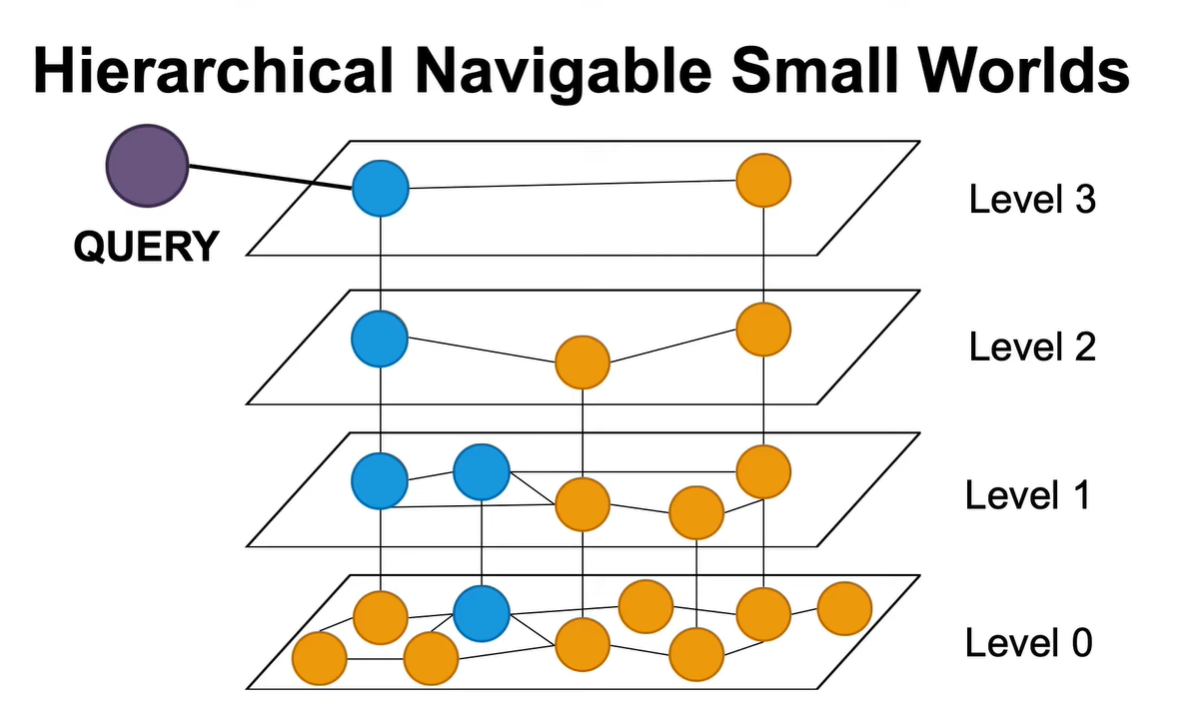
HNSW is currently the gold standard for fast, accurate vector search.
It’s used because it’s:
- extremely fast
- extremely accurate
- scalable
- memory‑efficient
- easy to tune
The Core Idea
Imagine your vectors are cities on a map.
HNSW builds multiple layers of roads:
Layer 0 (bottom layer)
- Dense local roads
- Every vector is connected to many neighbours
- Great for fine‑grained accuracy
- Slow if used alone
Layer 1, 2, 3… (upper layers)
- Sparse highways
- Only a few long‑distance connections
- Great for fast navigation
How search works
- Start at the top layer (few nodes → fast).
- Move toward the query vector using long‑distance links.
- Drop down a layer.
- Refine the search using more local connections.
- Repeat until you reach the bottom layer.
- Return the nearest neighbours.
This structure gives you:
- logarithmic search time
- near‑exact accuracy
- massive speed improvements
Why HNSW Matters for WordPress Developers
1. It makes semantic search fast enough for real‑time use*
Even with hundreds of thousands of posts or products.
2. It’s the default in most vector DBs
If you use Pinecone, Qdrant, Weaviate, or Milvus — you’re using HNSW.
3. It’s ideal for WordPress workloads
WordPress content is:
- short
- numerous
- frequently updated
- semantically rich
HNSW handles this beautifully.
4. It works well with PHP APIs
You can:
- embed content in PHP
- send vectors to a vector DB
- query using HNSW
- return results to WordPress
All without touching low‑level ANN code.
When To Use ANN/HNSW
Use ANN/HNSW when:
- You have 10k+ embeddings
- You want instant search results
- You’re building semantic search
- You’re integrating with Pinecone, Qdrant, Weaviate, Milvus, or FAISS
- You want BM25 + embeddings hybrid search
- You’re building AI‑powered WooCommerce search
Do not use brute‑force search unless your dataset is tiny.
Ultra‑Short Summary
ANN
Fast, approximate vector search.
Trades tiny accuracy loss for huge speed gains.
HNSW
The best ANN algorithm.
Uses multi‑layer graphs to find nearest neighbours quickly and accurately.
Default in most vector databases.